
Our engineers and team of experts at Excel Bridge Company will make every effort to provide you with the best bridging solutions we can offer, that will meet your project requirements, be aesthetically pleasing as possible, without exceeding your budget.
Stringer/girder
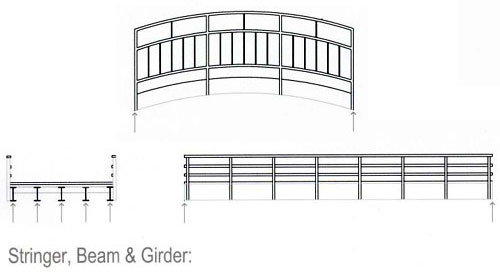
These different terms are used to describe the same type or style of bridge.
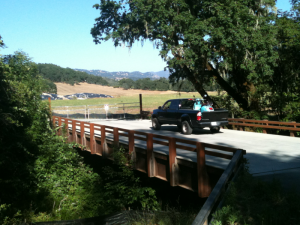
Standard vehicular (Beam/ Girder / Stringer) style bridge (above)
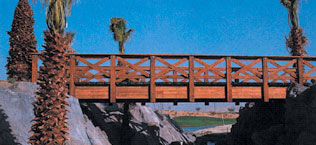
Beam span below has the strength and longevity of steel beams,
covered with the natural beauty of wood (below).
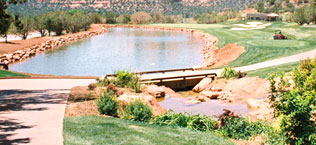
Beam Bridge with low profile railings – typically in private use scenarios
Stone Covered “Beam” or “Girder” Span
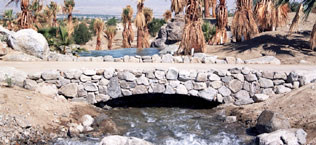
Short spans can be dressed with masonry or rock, which may add significantly to costs.
Truss Types

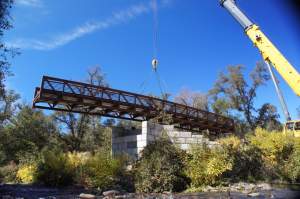
Pratt – Single diagonal (above) This is the industry “standard” (most economical) option.

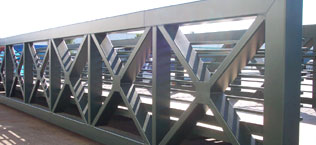
Pratt – Double diagonal

True Bowstring

Modified bow
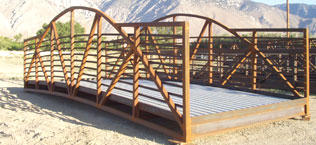
True Bow
Note: the height of the truss is typically determined by the bridge length, in combination with the bridge loading requirements, but with Bowstrings, aesthetics (top chord “arch”), and shipping parameter requirements are also considered. If a certain truss height is desired, it must be specified.
Alternate Truss Types:
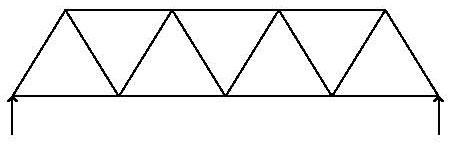
True Warren (alternating diagonals & no vertical members) Noticeably more expensive than a standard “Pratt” truss.
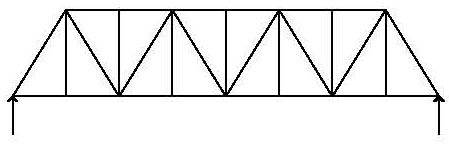
Divided Warren (utilizes vertical members) Generally not much more expensive than a standard “Pratt” truss bridge.
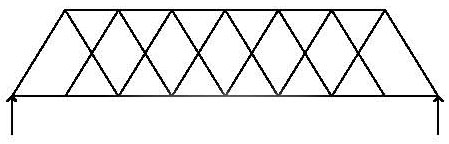
Double Warren (no vertical members, but double diagonals) – more expensive than “True Warren”

Vierendeel – By far the most expensive option and utilizes largest member sizes
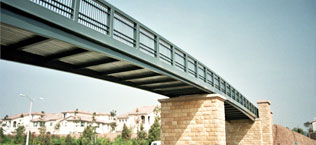
Vierendeel Truss (above) with additional tapered floor beams for aesthetic & structural purposes
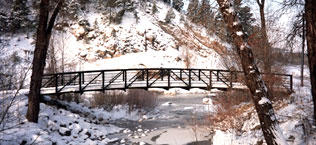
Howe Truss (diagonals run opposite direction of the Pratt). Typically not significantly more expensive than the “Pratt”
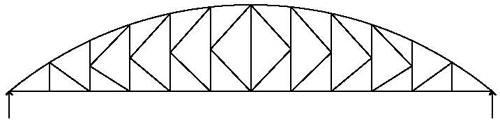
Deck Truss (trusses located below deck area) Typically more expensive, but allows for any type of safety railing desired.
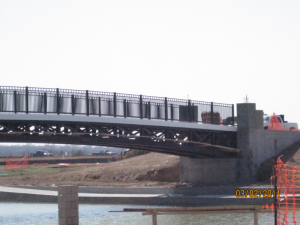
Additional truss information
Truss section variations:
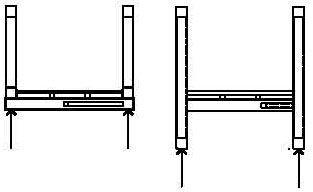
“Pony” or “Pratt” truss bridges are half-through truss bridges (no overhead members)

“Box” or full-through truss (overhead members)
Two types of pony truss configurations:
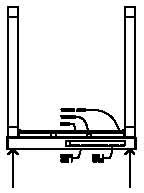
“U” – Section Bridge (“under hung floor beam”) generally for shorter spans
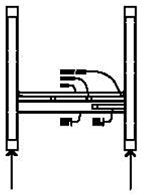
“H” section – preferred in most instances, especially for longer spans
Truss end conditions (applies to most truss types):
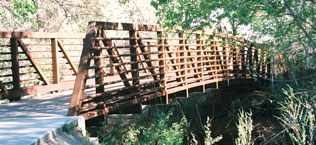
Sloped ends (not an option for all bridge lengths, styles, etc..)
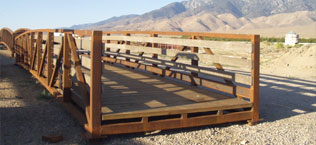
Squared ends (Industry standard and most common) with wooden safety rails
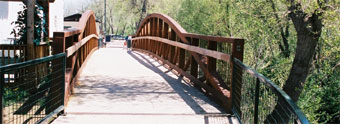
Squared ends were added to this “Bow” truss in effort to meet 42” or 54” standard railing height code requirements
Truss diagonals:
One diagonal member is very important for structural reasons, but sometimes two are specified for aesthetic reasons.
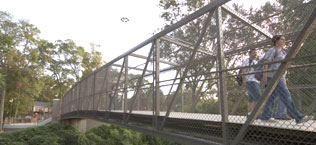
Single diagonal design shown above on “Box” span
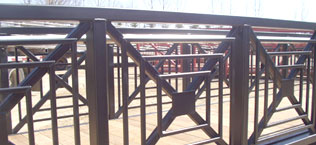
Double diagonal design (above) with custom “box” style safety railings
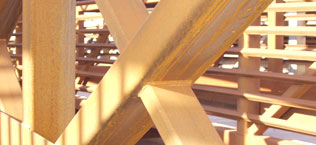
Unequal sized diagonals or equal size diagonals may be specified