
Weathering Steel:
This material is a special, low alloy steel that forms a oxide patina (coating) on the surface that prevents further rusting under most conditions. Officially called “Atmospheric Corrosion Resistant Steel”, we refer to it as “weathering steel”. For our type of bridges, “weathering steel” can be the perfect option in most cases. This is because it provides a nearly maintenance free and natural looking finish. Some people are fooled by the finish and believe many of our structures are actually fabricated from wood. Although this type of steel costs slightly more than normal mild steel, the “weathering steel” bridges are typically 20-30% less expensive than other options because properly done coatings such as paint or “hot-dipped galvanizing” are quite costly.
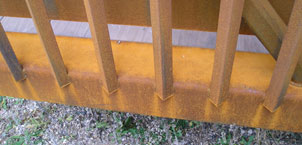 Weathering steel begins rusting like all steel. |
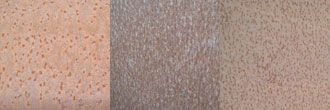 Years later there is no noticeable deterioration. |
Color: The color of weathering steel depends upon the pH of the local dust and rain. It develops over months & even years, and the color varies from grayish to shades of orange & brown, depending on how far along the “weathering” process is at. Damage to the finish will self heal over time. Notice the fine grain and tight adherence of the rust in the photo above. This oxide coating will typically stop getting thicker at about 3-6 mils thick.
Cannot be used everywhere: Weathering steel is NOT APPROPRIATE for extremely humid climates, in close proximity to coastal waters, or other corrosive environments, such as near chlorinated pools, brackish rivers, etc… This steel must go through many wet/dry cycles before the protective layer develops.
Restrictions: Weathering steel must be freely exposed to the air on all sides; project designers must keep this in mind to prevent areas that may entrap debris and moisture. If portions are buried in soil, covered in vegetation, or exposed to corrosive elements, (most notably winter salting of walkways), it will deteriorate much more rapidly.
Rust runoff: Weathering steel may often cause rust staining on concreted decks and sub structure. Sometimes concrete dyes are used to mask the stains. Other options are water diversion methods, or silicone treatments to minimize staining, during the early years when oxide run off will be the heaviest.
Also Known As: Often specified as M270 by AASHTO. ASTM numbers for tubes plates and shapes are A847, A588, A242, A709 and A606. Bolts for splices are usually A325. Corrosion index for “weathering steel” is usually specified at 5.8. A common known name brand for this steel is COR-TEN®. Due to it’s brittleness COR-TEN® is almost never rolled into tubes.
Web sites with technical data:
- http://www.corrosion-doctors.org/Forms/weathering.htm
- http://www.fhwa.dot.gov/legsregs/directives/techadvs/t514022.htm
- http://www.aisc.org
Painting:
For aesthetics and/or additional corrosion protection, epoxy coatings are commonly used as well on these structures. A number of different paint coating systems can be provided by Excel, please call for discussion.
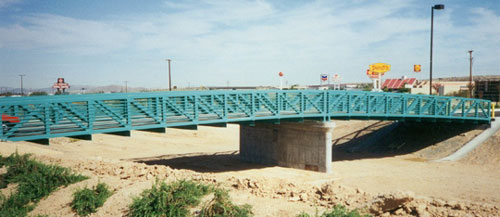
Painted Bridges:
Typically costing between 10% – 30% (depending on bridge size and paint system) more than weathering steel, painted bridges require periodic inspection, repair, and sometimes blasting and re-coating after many years. Most paint manufacturers agree that paint life is dependent upon material preparation, proper mixing of primer and paint, and correct application, but equally important is the environment the bridge will be subject to, as well as potential damage by people. Be sure you choose a supplier that has significant experience with painting bridge structures such as Excel to avoid a greater potential of issues down the road.
Weathering steel can be painted just as with regular steel. No formal research is known to exist regarding the benefit of using weathering steel under paint, but field observations indicate that painted bridges using weathering steel may last longer. For instance, paint film injuries seem to stop corroding once the “weathering” effect happens in the damaged areas.